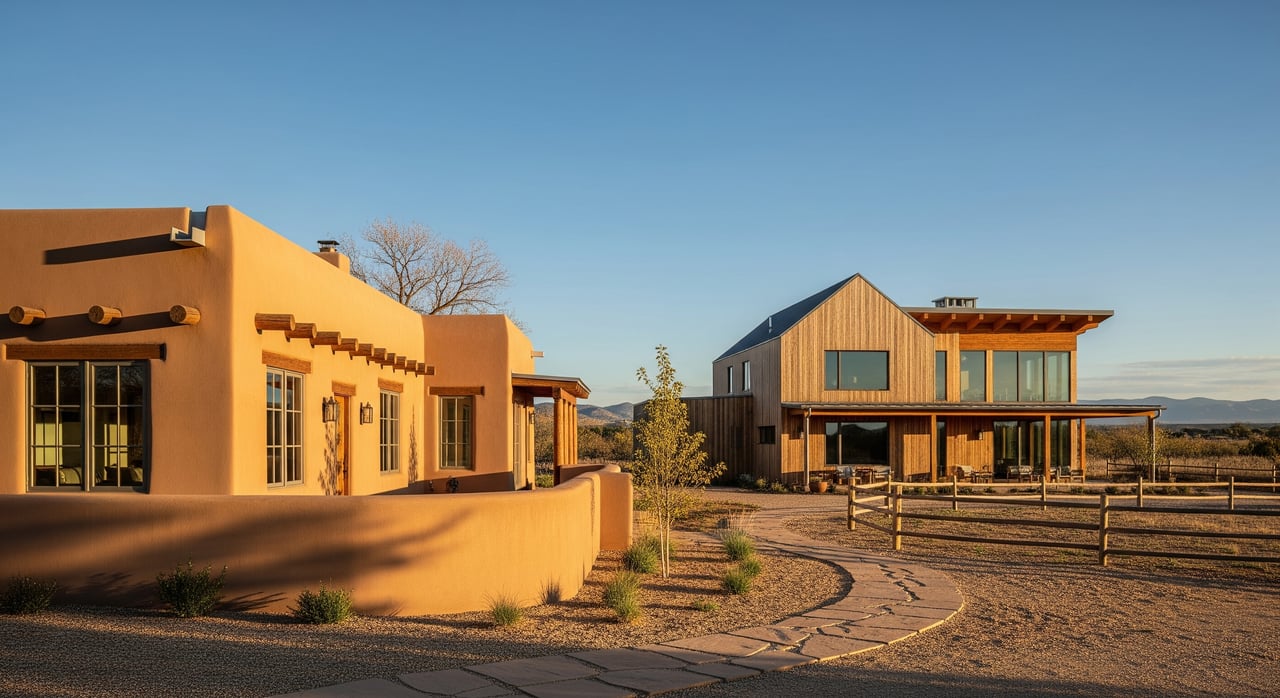
Is the soul of Corrales calling you to an adobe classic or a modern, low‑maintenance frame home? Choosing between these two styles is not just about looks. It is about comfort in a high‑desert climate, how you will maintain the house, and what lenders and insurers will need. This guide walks you through how each construction type performs in Corrales, what to inspect, and how to plan for resale. Let’s dive in.
Corrales climate and property context
Corrales sits along the Rio Grande, with rural acreage, historic homesteads, and newer infill. Summers are sunny and dry with big day‑night temperature swings. Monsoon storms can hit hard in late summer, and some properties near the river have floodplain exposure.
Wildfire and brush‑fire risk are also part of the picture. These conditions shape how adobe and frame homes age and perform. Site drainage, roof condition, and defensible space matter as much as wall type.
Adobe basics
How adobe is built
Traditional adobe uses sun‑dried earthen bricks set in mud mortar. Walls are thick, often 12 to 24 inches or more. Roofs and beams bear on those masonry walls, with wood members like vigas and lintels in many homes.
How adobe feels to live in
Adobe’s strength is thermal mass. The walls store heat during the day and release it at night. In a place with big swings between daytime and nighttime temperatures, that can smooth indoor comfort and reduce peak cooling needs.
Finishes and what to avoid
Breathable plasters, such as earthen or lime, let moisture escape. Cement stucco on traditional adobe can trap moisture if it is not detailed correctly. Good roof overhangs, working gutters, and proper grading are your first line of defense.
Frame home basics
How frame is built
Wood‑frame homes use stud walls with sheathing, insulation in the cavities, and exterior finishes like stucco, fiber cement, or siding. Roofs are commonly trussed. Utilities and mechanical systems fit neatly inside wall cavities.
Comfort and efficiency
Frame construction makes it simple to reach high insulation levels with conventional materials. When paired with good air sealing and right‑sized HVAC, frame homes can be very energy efficient.
Common finishes
In New Mexico, stucco is common over frame. You will also see wood or fiber cement siding and, sometimes, brick veneer. Detailing at windows, doors, and roof intersections is key to keep water out.
Energy and comfort in Corrales
Both adobe and frame can be comfortable and efficient here.
- Adobe advantages: thermal mass that evens out temperature swings, reduced peak overheating, and a solid, quiet feel.
- Frame advantages: high R‑values are easier to achieve, predictable mechanical layouts, and straightforward upgrades like exterior insulation.
The bottom line: Adobe excels when passive design is part of the package, such as shading and night ventilation. Frame construction more easily meets modern insulation standards with off‑the‑shelf solutions.
Moisture, drainage, and storms
In our semi‑arid climate, moisture shows up fast during monsoons and around irrigation. Both home types need good water management.
- Adobe priorities: broad overhangs, intact roof coverings, gutters that throw water clear of walls, correct grading away from the foundation, and breathable plasters. Watch for splash erosion near ground level and any sign of rising damp.
- Frame priorities: reliable flashing at windows and doors, intact housewrap or weather barrier, sealed penetrations, and sound roof‑to‑wall connections. Keep wood dry to prevent rot and insect issues.
For either type, start outside with roof, drainage, and grading. These items protect your investment more than any single interior upgrade.
Structure, safety, fire, and pests
Seismic considerations
Unreinforced historic adobe has low tensile strength and can underperform in earthquakes. Many New Mexico adobe homes have been retrofitted with anchors, confining bands, or diaphragm improvements. Modern frame construction, built to code, generally handles seismic forces better. If you are buying an older adobe, verify any retrofit details with a qualified professional.
Fire and pests
- Fire: Adobe walls are earthen and noncombustible, which is a plus. Roofs, eaves, and wood elements still need protection. Frame homes rely on ember‑resistant details, Class A roof coverings, and defensible space in higher risk areas.
- Pests: Adobe itself does not attract wood‑eating insects, but embedded wood members should be inspected. Frame homes are more susceptible to termites and rot if moisture is present. Termite inspections are standard in the region.
Longevity and repairs
Well‑maintained adobe can last for centuries. Repairs often involve earthen or lime plaster and experienced trades. Frame homes are typically easier to open up and repair with widely available contractors. Either way, documentation and regular maintenance drive longevity.
Maintenance and renovation costs
Here is what to plan for as an owner.
- Adobe routine care:
- Periodic re‑plastering with compatible materials.
- Roof and overhang inspection to control splash and runoff.
- Monitoring for moisture at the base of walls and around penetrations.
- Frame routine care:
- Stucco or siding maintenance and sealant renewal.
- Flashing checks at windows, doors, and roof intersections.
- Termite prevention and periodic inspections.
Renovation realities:
- Adobe: Running new plumbing or wiring in adobe requires careful methods to avoid damaging earthen walls. Avoid trapping moisture with non‑breathable finishes. Seismic retrofits and expert plaster work may be needed in older homes.
- Frame: Upgrades are modular. It is simple to add insulation, re‑run mechanicals, or re‑sheath during a remodel.
Costs vary with condition and scope. New wood‑frame builds are usually faster and less expensive. Specialized adobe work may be less frequent but can require skilled labor that is pricier and less available.
Insurance, financing, and permits
Insurance tips
Insurers look at construction type, roof covering, age, and location risks such as flood or wildfire. Adobe can trigger extra underwriting review, especially if finishes are unconventional or if the structure predates modern codes. Start quotes early and ask about required inspections or exclusions.
Financing tips
Many loans work for both adobe and frame, but lenders may be cautious with unreinforced historic adobe or unique earthen systems. Local banks and specialty lenders often understand regional construction better. Buyers should line up a lender familiar with adobe. Sellers should compile records for repairs, plaster work, roof updates, and any structural retrofits to support the appraisal and underwriting.
Permitting and code
New builds and major renovations require permits under New Mexico code, with local interpretation in the Village of Corrales. Older adobe with historic character may require specific repair methods and engineered solutions for structural changes. Check permit history on any additions and confirm that recent work was inspected.
Resale realities in Corrales
Who loves adobe
Many buyers are drawn to authentic Southwestern character, thick walls, and handcrafted details. Well‑documented adobe can command a premium. The buyer pool can be more selective, so removing uncertainty is key.
Strengths of frame homes
Frame homes often have broad market appeal and straightforward comps. They may insure and finance more easily, which can shorten time on market in some price bands.
How to market either home
- For adobe sellers: provide a maintenance log, plaster dates, roof work, drainage improvements, retrofit details, and inspection reports. Highlight comfort and energy features that show day‑to‑night performance.
- For frame sellers: document insulation levels, HVAC upgrades, termite history, and exterior maintenance. Emphasize ease of ownership and energy efficiency.
Buyer inspection checklist
Start with items that matter in Corrales, no matter the construction.
- Flood and water: Is the property in a mapped flood zone? How do irrigation and drainage behave on site?
- Roof: What is the condition of coverings, flashings, and overhangs? Are gutters present and working?
- Site grading: Does water slope away from the foundation? Any signs of erosion or splashback?
- Systems: Age and condition of electrical, plumbing, and HVAC. Were updates permitted and inspected?
- Permits: Are additions or major remodels documented?
- Fire readiness: Defensible space, ember‑resistant details, and Class A roofing where appropriate.
Adobe‑specific checks:
- Exterior finish type and last re‑plaster date.
- Evidence of past adobe repairs and photos or invoices.
- Any stabilizers used in blocks and where.
- Seismic retrofit details, if present.
- Condition of wood members such as vigas and lintels.
- Signs of moisture at base of walls or interior finishes.
Frame‑specific checks:
- Termite inspection status and any wood‑rot repairs.
- Insulation levels and air sealing quality.
- Condition of stucco or siding and window/door flashing.
Which is right for you
Choose adobe if you want authentic Southwestern character and you are comfortable with earthen plaster maintenance and specialized trades. Look for strong drainage, protective overhangs, and documented upgrades.
Choose frame if you want fast, predictable upgrades, high insulation levels, and broad market appeal. Focus on solid water management, airtightness, and reliable mechanicals.
Both can be excellent choices in Corrales. The right decision comes down to the specific site, condition, documentation, and how you plan to live in the home.
Ready to compare options or prep your home for the market? Reach out to the local team at Momentum Real Estate Group for a thoughtful, no‑pressure strategy that fits your goals.
FAQs
What should Corrales buyers inspect first on adobe homes?
- Start with roof condition, overhangs, and site drainage, then check plaster type, moisture at the base of walls, and any documented seismic retrofits.
How do frame homes handle Corrales’ monsoon storms?
- Frame performs well with proper flashing, sealed penetrations, intact weather barriers, and grading that moves water away from the foundation.
Are adobe homes harder to insure in Corrales?
- They can require extra documentation on age, roof, electrical, and structural retrofits, so get quotes early and clarify any exclusions before you go under contract.
Do adobe homes cost more to maintain than frame?
- Adobe often needs compatible re‑plastering and skilled trades, which can be pricier per hour, while frame maintenance is more routine but may occur more frequently.
Which construction type is more energy efficient in Corrales?
- Both can perform well; adobe excels at smoothing temperature swings with thermal mass, while frame more easily achieves high insulation levels and tight air sealing.
What helps adobe or frame resale in Corrales?
- Clear documentation of maintenance and upgrades, evidence of good drainage and roof care, and recent inspections help buyers feel confident and support a clean appraisal.
