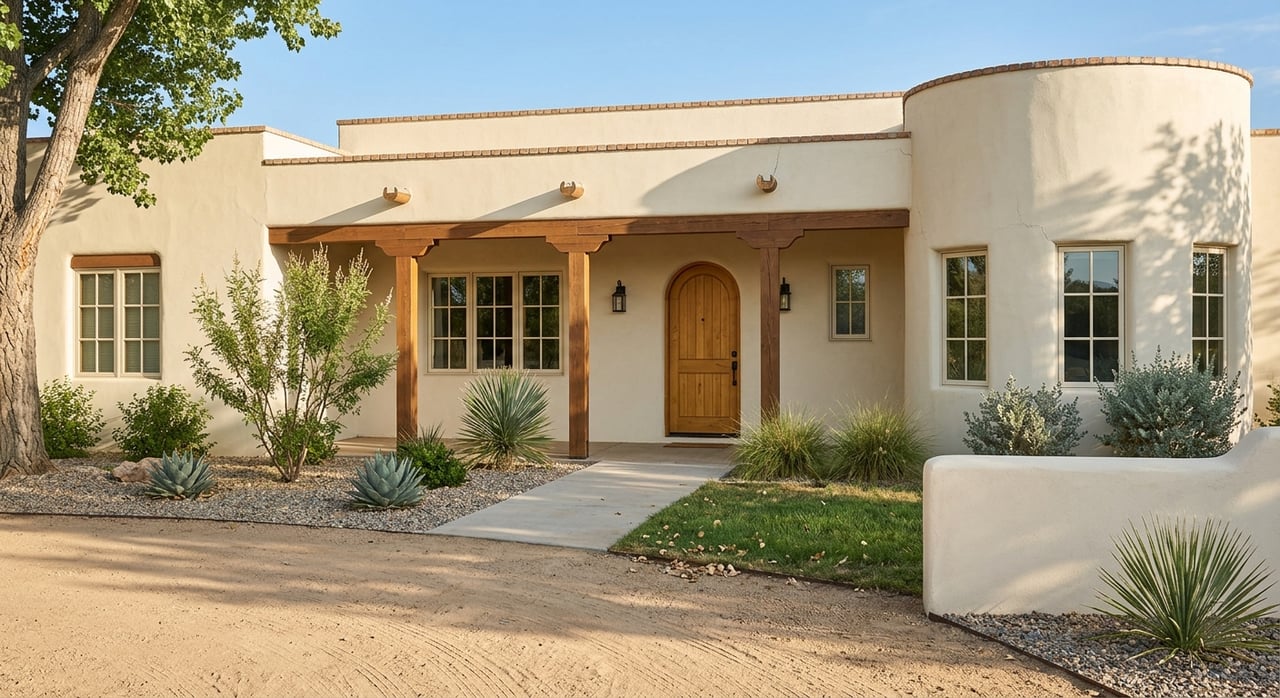
If you have ever driven through Los Ranchos or Albuquerque’s North Valley and felt like the homes looked more layered, more grounded, and less cookie-cutter than other parts of town, you are seeing the area’s history in real time. This is a place shaped by agriculture, acequias, deep lots, and generations of building styles rather than one big wave of subdivision growth. If you are house hunting, browsing listings, or simply trying to understand what gives this area its character, knowing the local architecture can help you read a property more clearly. Let’s dive in.
Why North Valley homes look different
Los Ranchos and the North Valley were shaped by agricultural settlement patterns, not a single development era. Village history and county planning documents describe adobe villages, acequias, agricultural fields, vernacular structures, mature trees, and long narrow land divisions often called lineas or tripas.
Those lot patterns were designed to preserve access to both irrigation and a roadway. As a result, many parcels are much deeper and narrower than they first appear from the street. When you look at a home here, the front view often tells only part of the story.
That layout also helps explain why so many properties feel rural-residential instead of fully suburban. Open space, cultivated land, and long drive lanes still shape the visual rhythm of the area in a way you do not see in many newer neighborhoods.
New Mexico Vernacular and adobe homes
One of the most important styles you will find in Los Ranchos and the North Valley is New Mexico Vernacular, often tied to adobe or adobe-like construction. These older homes are commonly one story and may feature flat roofs or corrugated metal roofs, exposed vigas, exposed lintels, and shaded portals.
Many of these homes were built with climate in mind. Research from the Albuquerque Museum notes that adobe walls help moderate indoor temperatures, and city guidance explains that vernacular homes often oriented entrances toward the more favorable solar side.
In practical terms, these homes can feel deeply connected to the site. The house, yard, porch, and shade often work together as one living environment rather than as separate parts.
It is also common for older adobe homes to have been updated over time. Additions, replacement windows, newer roofs, and remodeled entries can soften or partially hide the original form, so a listing photo may not always tell you the whole architectural story.
Pueblo Revival and Spanish-Pueblo Revival
If you picture classic regional Albuquerque architecture, you are probably thinking of Pueblo Revival or Spanish-Pueblo Revival. These styles draw from Pueblo, Spanish Colonial, and Mission influences and remain some of the most recognizable looks in this part of New Mexico.
Common features include flat roofs, parapeted walls, stucco exteriors, and projecting vigas. The City of Albuquerque also identifies details such as thick irregular walls, inward-sloping massing, exposed lintels, canales, carved corbels, and wood porch posts as common markers of Spanish-Pueblo Revival design.
These homes often feel sculptural from the street. Their appeal is not only in the façade but also in the way shadows fall across stucco walls, how portals create shelter, and how the structure relates to courtyards or walled outdoor space.
For buyers, this style can be especially appealing if you want a home that feels distinctly tied to New Mexico rather than borrowed from a national trend. In Los Ranchos and the North Valley, that regional connection is a major part of the lifestyle.
Territorial Revival in the North Valley
Another style to watch for is Territorial Revival. According to a current City of Albuquerque corridor plan, this style appears more often in the North Valley than in the city center.
Territorial Revival blends adobe traditions with more formal imported materials and detailing. City sources describe features such as brick copings, pedimented lintels, and wooden dentil courses as common identifiers.
Compared with pure adobe vernacular, Territorial Revival usually looks a bit more squared, trimmed, and formal. You may still see thick walls and regional materials, but the decorative finish tends to be more defined and orderly.
If you are comparing homes, this style often stands out because it bridges rustic and refined. It can feel distinctly New Mexican while also carrying a more tailored visual presence.
Ranch and mid-century homes
Not every home in the North Valley is adobe-inspired. After World War II, one-story ranch-style homes became more common in North Valley neighborhoods, along with simpler mid-century forms and later additions.
These homes usually feature low-pitched roofs, broad eaves, simpler ornament, and horizontal lines. Some also include integral garages and a more straightforward massing than older regional styles.
This matters if you are shopping in a mixed-age area. A block may include an older adobe, a Pueblo-influenced remodel, a mid-century ranch, and a newer infill home all within a short stretch.
That mix is part of what makes the area feel organic. It developed over time, so the neighborhood character often comes from the landscape and lot pattern as much as from one single architectural style.
How climate shapes the architecture
Albuquerque’s climate helps explain many of the design choices you see in Los Ranchos and the North Valley. NOAA describes the area as arid continental, with abundant sunshine, low humidity, limited precipitation, and wide seasonal temperature swings.
That climate makes shade, thermal mass, and outdoor living especially important. It helps explain why portals, courtyards, mature trees, walled yards, and sheltered entry spaces are such common features.
It also shapes landscaping. Research from New Mexico State University and the Village’s agriculture program points to drought-tolerant planting, acequia use, drip irrigation, and climate-adapted landscapes as practical responses to local conditions.
So when you look at a property here, do not focus only on the front elevation. The way the home creates shade, privacy, and outdoor function is often just as important as the floor plan itself.
What to notice in listing photos
If you are scrolling listings or doing a drive-by, a few visual cues can help you identify what you are seeing.
Adobe and Pueblo-style clues
Look for:
- Rounded or battered parapets
- Earth-tone stucco
- Recessed openings
- Exposed vigas or beam ends
- Canales
- Carved corbels
Territorial-style clues
Look for:
- Brick coping
- Brick dentils
- Squared rooflines
- Pedimented windows or doors
- A more formal, trimmed appearance
Ranch and mid-century clues
Look for:
- One-story layout
- Low-pitched roofs
- Broad eaves
- Integral garages
- Simpler ornament and cleaner lines
Lot and landscape clues
Also pay attention to:
- Long narrow parcels
- Mature trees
- Drive lanes or side access
- Acequia-adjacent paths
- Agricultural or open-space views behind the house
Why the site matters as much as the house
In Los Ranchos and the North Valley, the relationship between the home and the land is often a major part of the property’s identity. The most telling visual clues may be the porch, patio, side yard, fencing, or how the building sits on the lot.
Research on New Mexico architecture notes that Spanish traditions often tied family rooms to shared outdoor space. Albuquerque’s historic design guidance also points out that porches serve practical purposes by protecting entrances from sun, wind, and rain.
That means a home’s appeal here is often experiential. A modest-looking exterior may open to a deep lot, shaded courtyard, mature trees, or a quiet garden area that completely changes how the property lives.
This is one reason local guidance matters when you are buying in the North Valley. Understanding the architecture is useful, but understanding how the house and land work together is what really helps you evaluate value and fit.
Keep remodels and overlays in mind
Because many homes in the area have evolved over decades, original style details may be partly hidden by later renovations. New roofs, new windows, doors, and additions can all change how an older adobe or vernacular home presents today.
That is not necessarily a bad thing, but it does mean you should look carefully. A house may have historic bones even if the visible finish feels newer.
It is also worth checking whether a property falls within a Historic Protection Overlay zone. In those areas, the City of Albuquerque states that exterior alterations, additions, fences, new construction, and demolition may require a Certificate of Appropriateness.
If you are drawn to a home because of its architectural character, that step is worth understanding early. It can shape what changes are possible and how future improvements may be reviewed.
Whether you are searching for an adobe with history, a Pueblo-style home with classic regional lines, or a ranch property with room to spread out, Los Ranchos and the North Valley reward buyers who know how to look beyond the surface. If you want local guidance on the homes, land patterns, and lifestyle details that make this part of Albuquerque so distinct, Momentum Real Estate Group is here to help.
FAQs
What architectural style is most common in Los Ranchos and the North Valley?
- You will find a mix of New Mexico Vernacular adobe, Pueblo Revival, Spanish-Pueblo Revival, Territorial Revival, ranch-style homes, and later infill, rather than one single dominant style.
What should buyers look for in North Valley adobe homes?
- Look for one-story massing, flat or metal roofs, exposed vigas, exposed lintels, shaded portals, and signs that the home may have been remodeled over time.
How can you identify Pueblo Revival homes in Albuquerque’s North Valley?
- Common clues include stucco walls, flat roofs, parapets, projecting vigas, recessed openings, canales, carved corbels, and shaded porches.
Why are lots in Los Ranchos often long and narrow?
- Village history explains that many lots were divided as long narrow parcels to preserve access to both irrigation and a roadway.
Why does outdoor space matter so much in North Valley home design?
- The local climate and building traditions make shaded portals, courtyards, porches, mature trees, and walled yards important parts of how many homes function and feel.
What should buyers know about historic protections in Albuquerque’s North Valley?
- If a property is in a Historic Protection Overlay zone, exterior changes such as additions, fences, new construction, or demolition may require a Certificate of Appropriateness from the City of Albuquerque.
