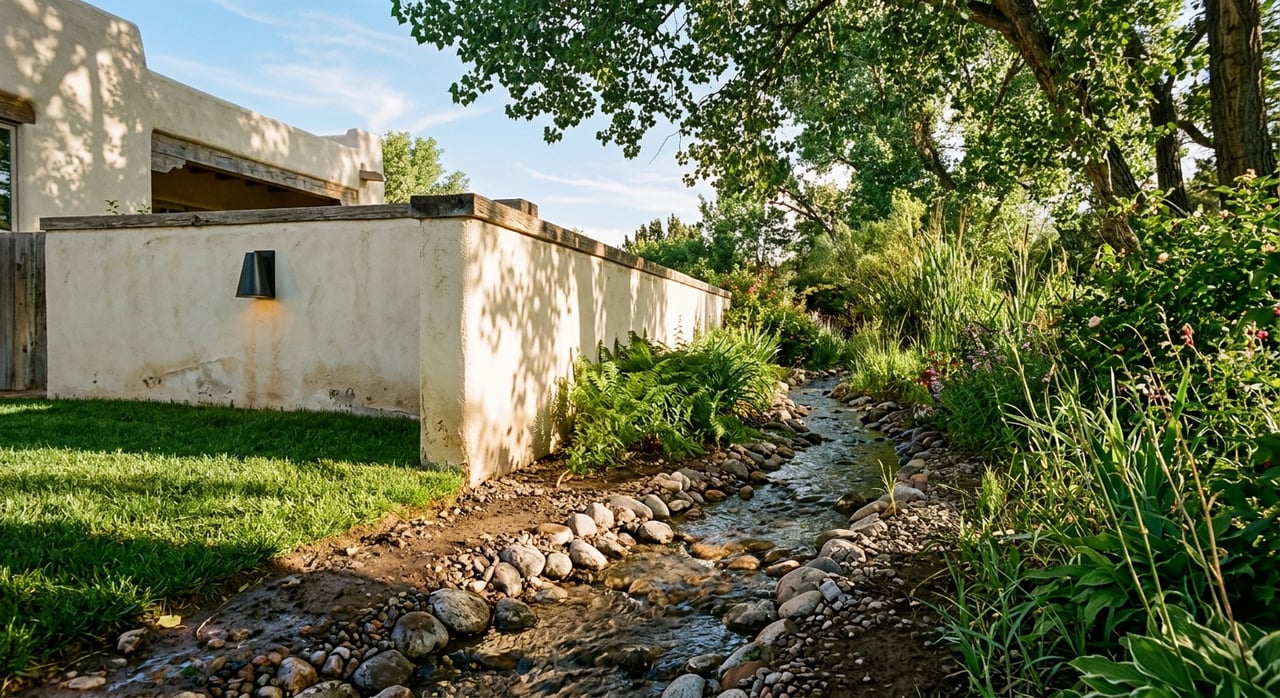
Thinking about buying land with irrigation in Los Ranchos or the North Valley? It can be an incredible lifestyle fit, but it also comes with details that are easy to miss if you have only bought typical suburban property before. If you want space for animals, gardening, small-scale farming, or simply the character that comes with these historic areas, it helps to understand how water access, ditch systems, and property obligations really work before you close. Let’s dive in.
Why irrigated properties are different
Los Ranchos and the North Valley are not laid out like newer subdivisions. According to the Village of Los Ranchos de Albuquerque, these areas developed from agricultural settlement patterns where lots were divided to maintain access to both irrigation and a roadway.
That history still shapes what you see today. Long, narrow parcels, visible ditches, side access routes, and unusual lot configurations often trace back to older systems of levees, canals, drains, laterals, and acequias. In practice, that means a property may look simple from the street while having a much more layered setup on the ground.
It also means you should not assume a ditch is owned by the property owner or available for unrestricted use. The Village’s master planning documents note that some land is owned by MRGCD, while other areas may fall within MRGCD easements, and ownership around water infrastructure can be difficult to determine. That is one reason careful due diligence matters so much on these properties.
How irrigation access works
When you buy an irrigated property, you are not just buying landscaping or a field that has been watered in the past. You are buying into a system that depends on water delivery, legal rights, and physical infrastructure.
The Middle Rio Grande Conservancy District explains that irrigation deliveries are coordinated through irrigation systems operators, often called ditch riders. When water supply is tight, deliveries may be scheduled on a rotational basis. When supply is stronger, delivery may better match crop or land needs, but irrigators still need to coordinate directly with the assigned operator.
This is important because reliability is not just about whether water is nearby. It also depends on Rio Grande flow, district operations, and legal priority.
Water rights are a separate issue
In New Mexico, water is governed by prior appropriation. The Office of the State Engineer states that all ground and surface waters belong to the public and are subject to that system, and priority administration can affect who receives water in times of shortage.
For buyers, the key takeaway is simple: do not assume that green pasture or mature trees prove transferable irrigation rights. A parcel may have a history of use, but the current status of the water right still needs to be verified.
The NMWRRS lookup system allows searches by owner name, file number, and point-of-diversion location. That gives you an official place to start when checking the record tied to a property you are considering.
Why title review matters
One of the biggest issues with irrigated land is that the water right tied to a parcel may not be in the condition you expect. MRGCD policy states that water will not be delivered to lands whose rights have been sold, severed, or transferred unless the owner can provide proof of a leaseback agreement, Water Bank enrollment, or another approved source of water.
That is why title work and document review are not just routine boxes to check. They are central to understanding what you are actually buying.
If you are under contract on a property in Los Ranchos or the North Valley, this is the point where a careful team can save you time, money, and frustration. You want to confirm whether the water right is appurtenant to the land, whether anything has been severed, and whether the current use matches the legal record.
Acequias can add another layer
Some buyers hear the word acequia and think of a simple irrigation ditch. In New Mexico, acequias are more than that. The Office of the State Engineer explains that acequias are political subdivisions of the state and are historically important community ditch systems.
That matters because acequias may come with governance, maintenance expectations, and local rules. Under New Mexico law, acequia commissioners can make assessments, manage the ditch, and adopt bylaws and rules, as reflected in the state statute.
So if the property is within an acequia association, ask for the current bylaws, contact information, and any active assessments or work expectations. These are normal questions and can help you avoid surprises after closing.
Infrastructure can affect what you can do
With irrigated property, the visible water system is only part of the story. Turnouts, check structures, and other control devices may be district property. According to MRGCD policy, those structures cannot be altered without permission.
That can matter if you are planning improvements like fencing, grading, utility work, a driveway change, or other site changes near a ditch or turnout. MRGCD also notes that a license may be required for infrastructure within district rights-of-way, and temporary uses such as construction or pumping may require a special-use license.
In other words, if your plans involve the ditch corridor in any way, it is smart to confirm the rules before work begins. That step can protect both your timeline and your budget.
Maintenance is part of ownership
Irrigated land can be appealing because of its flexibility and character, but it usually comes with ongoing responsibilities. MRGCD says irrigators are responsible for keeping on-farm delivery systems efficient, and water can be refused if the system is obstructed, overgrown, silt-laden, or otherwise unable to move water properly.
The district also states that it may limit delivery when irrigation is wasteful. That means ownership is not just about having access to water. It is also about maintaining the system so it functions properly and responsibly.
For many buyers, this is manageable. But it should be part of your decision-making if you are comparing an irrigated acreage property to a more conventional homesite.
Budget for ongoing costs
Another common surprise is that carrying costs may extend beyond standard property taxes and utilities. MRGCD assesses a Water Service Charge on lands that receive water from district works, and the district states that it delivers water only to current accounts.
The assessment office also works with title companies to search for unpaid charges. That is helpful, but you should still ask directly whether the account is current and whether any liens, unpaid assessments, or classification issues need attention.
At the acequia level, there may also be separate assessments or obligations depending on the property’s location and governance structure. When you are budgeting for ownership, it is wise to account for both district-level and association-level costs if they apply.
Due diligence questions to ask
Before you buy an irrigated property in Los Ranchos or the North Valley, ask clear, practical questions. A strong diligence process should include the following:
- Is the parcel currently receiving irrigation water?
- Who is the local ISO or ditch rider?
- Are there any unpaid MRGCD assessments or liens?
- Is any portion of the property within an easement or right-of-way?
- Are there restrictions that could affect fences, utilities, access, or future improvements?
- Is the water right appurtenant to the land?
- Have any rights been sold, severed, transferred, or leased back?
- Is the property part of an acequia association?
- Are there bylaws, assessments, or owner work expectations?
- Will any planned improvements require an MRGCD license or permission?
These questions are not meant to scare you off. They are meant to help you buy with confidence.
A practical path for buyers
The safest path is to verify the records and talk with the right people early. The research points to a smart workflow: review the parcel in the New Mexico Water Rights Reporting System, speak with MRGCD, confirm whether an acequia association is involved, and include title professionals and a water-rights attorney in your diligence process when needed.
This is especially important if you are buying for a specific use, such as horses, pasture, orchards, or active irrigation. The more your lifestyle depends on dependable water access, the more important it is to confirm the legal and operational details before closing.
Why local guidance matters
Buying in Los Ranchos or the North Valley is often about more than square footage. You may be looking for room to grow food, keep animals, enjoy open space, or own a property with deep ties to the area’s agricultural history.
Those goals can absolutely be worth pursuing, but they call for a more informed buying process. A property that looks ideal online may need much closer review once you start asking about rights, delivery, assessments, easements, and ditch infrastructure.
That is where thoughtful local guidance can make a real difference. At Momentum Real Estate Group, we help buyers navigate the details that come with lifestyle properties in the North Valley and surrounding areas so you can move forward with clarity.
FAQs
What makes an irrigated property in Los Ranchos or the North Valley different from a typical residential property?
- These properties often involve historic lot layouts, ditch systems, possible easements, water delivery coordination, and separate water-right questions that do not usually come up with standard suburban homes.
How can you verify water rights for a North Valley or Los Ranchos property?
- You can start by searching the parcel or owner information in the New Mexico Water Rights Reporting System and then confirm details with MRGCD, the seller, title professionals, and a water-rights attorney when appropriate.
Can you assume a property has irrigation rights if it has green fields or mature landscaping?
- No. Existing landscaping or past irrigation use does not confirm that transferable water rights are still appurtenant to the property.
What is the role of MRGCD when buying irrigated property in Albuquerque’s North Valley?
- MRGCD manages water delivery through its district systems, assesses water service charges, and oversees certain infrastructure, rights-of-way, and delivery requirements that may affect the property.
What should you ask if a Los Ranchos property is part of an acequia association?
- Ask for the association’s bylaws, current contact information, assessments, maintenance expectations, and any rules that could affect your ownership or use of the property.
Are there extra costs tied to irrigated property ownership in the North Valley?
- Yes. In addition to normal ownership costs, you may have MRGCD water service charges and, in some cases, acequia-related assessments or maintenance obligations.
